 English
 Español
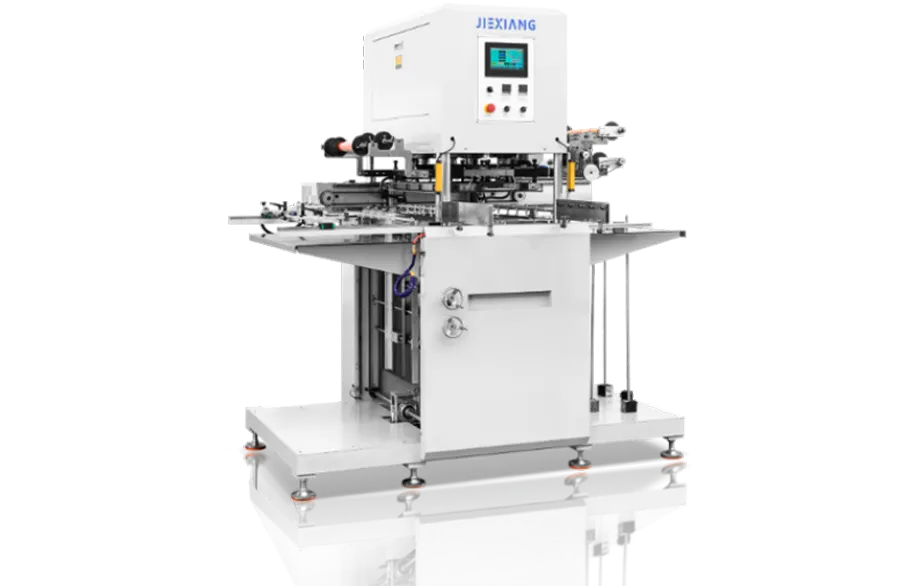
You've got a deadline, a stack of sheets, and a press that needs to keep up. An automatic foil hot stamping machine that runs slowly or requires constant intervention isn't just inefficient—it's a bottleneck that holds up the entire finishing line. But what actually makes a stamping press efficient? It's not just about sheets per hour. It's about how quickly you can set up a new job, how little foil you waste, how much energy the machine consumes, and how reliably it runs without unplanned stops. This article examines the design features that allow the JIEXIANG machine to deliver high throughput with minimal operator input—from fast changeovers to intelligent energy management to the thoughtful safety features that keep production flowing.
Questions Production Planners Ask About Throughput and Efficiency
Two Practical Concerns—Answered Up Front
Q: How quickly can the machine switch between different stamping jobs?
A: Setup time is minimized by the touchscreen control interface that stores job parameters, the servo-driven foil feeding system that adapts to different foil widths and lengths, and the automatic pressure adjustment that eliminates manual re-calibration. Changeovers that used to take 30–45 minutes on older presses can be completed in under 15 minutes.
Q: Does the machine waste foil during setup or between jobs?
A: The longitudinal foil feeding system reduces foil consumption, and the computer-controlled monitoring system tracks remaining and consumed foil length. The alarm triggers when foil drops below 10 cm, so you don't waste material by running out mid-job or discarding unused tails.
Fast Changeover That Minimizes Downtime
In a busy finishing operation, every minute the press sits idle for setup is a minute of lost production. The JIEXIANG machine is designed for rapid changeovers—from the control system that saves your settings to the mechanical adjustments that don't require tools.
Recipe Storage for Instant Job Recall
The Sino-English touchscreen control interface allows you to save and recall job parameters for different products. When you run a repeat order, you don't have to re-enter all the settings—you simply select the saved recipe, and the machine configures itself. This eliminates the trial-and-error period that typically consumes setup time.
Tool-Less Adjustments for Foil and Pressure
The servo-driven foil feeding system adjusts to different foil widths (20-600mm) and lengths without manual re-configuration. The automatic pressure adjustment system lets you change pressure settings from the control panel—no wrenches, no shims, no guesswork. These features mean setup is a matter of selecting parameters, not physically adjusting components.
Energy Management That Reduces Operating Costs
Efficiency isn't just about speed—it's about the cost per sheet. The JIEXIANG machine incorporates several features that keep energy consumption under control without compromising performance.
Two-Zone Electric Heating with Precise Control
The electric heating system uses 4kW power across two temperature zones, each adjustable from 40-200℃. The ability to set different temperatures for different zones means you're not overheating areas that don't need it—saving energy and reducing warm-up time. The precise temperature control also ensures consistent foil transfer, reducing rejects that would waste material and energy.
Servo Drive That Delivers Power Only When Needed
Unlike conventional induction motors that run at constant speed regardless of load, the servo drive provides power proportional to demand. During idle periods or light loads, the motor consumes less energy. Over a full shift, these savings add up—reducing both electricity costs and heat output in the production area.
Safety Features That Prevent Costly Stops
Unexpected stops are the enemy of efficiency. The JIEXIANG machine incorporates multiple safety and protection systems that prevent damage and keep production running.
Overload and Fracture Protection
The main servo includes overload protection, and the timing belt features fracture protection. If an external impact or overload occurs, the machine automatically halts to minimize damage to the body and feeding accuracy. This prevents minor incidents from becoming major repairs that would take the press offline for hours or days.
Vacuum Negative Pressure Detection
The machine uses vacuum negative pressure detection to ensure machine operation ceases upon absence of paper. If the feeder runs out of sheets, the press stops automatically—preventing the stamping plate from striking an empty platen, which could damage the plate or the foil system. This detection also alerts the operator so they can reload quickly.
Electronic Sensors for Safe Operation
The paper receiving unit features a photoelectric sensor that ensures neat stacking and automatically lifts the table as the stack grows. This prevents jams that could cause paper damage or mechanical overload. The machine also includes safety interlocks that stop operation if covers are opened, protecting operators from moving parts.
Foil Management That Eliminates Waste
Foil is a significant consumable cost in hot stamping. The JIEXIANG machine is designed to maximize foil utilization and minimize waste.
Longitudinal Feeding That Reduces Consumption
The longitudinal foil feeding system feeds the foil in the direction of paper travel, which is more efficient than transverse feeding for many applications. This reduces foil consumption and saves foil replacement time—direct savings on material costs.
Real-Time Foil Monitoring
A computer-controlled monitoring system displays remaining and consumed foil length. An alarm triggers if foil length drops below 10 cm. This means you never run out of foil mid-job—and you never waste foil by discarding rolls that still have usable material. The system gives you the information you need to optimize foil usage across jobs.
Technical Specifications That Define Performance
| Parameter | Specification |
|---|---|
| Max. Feeding Paper Size | 600×500mm |
| Min. Feeding Paper Size | 200×150mm |
| Max. Foil Stamping Size | 500×400mm |
| Stamping Precision | ≤±0.1mm |
| Max. Working Pressure | 20T |
| Max. Working Speed | 1800 sheets/hour |
| Paper Specifications | 128~3000g/m² (cardboard), 3.0mm thick grey board |
| Max. Feed Pile Height | 600mm |
| Max. Foil Length | 240m (length wise) |
| Foil Width | 20-600mm |
| Electric Heating System | 4kW, 2 temperature zones, adjustable 40-200℃ |
| Main Motor Power | 3kW |
| Overall Dimensions | 1800×1550×1800mm |
| Machine Weight | 1000kg |
| Full Load Power | 7kW |
| Working Voltage | 1P/220V |
Applications That Benefit from High Efficiency
The combination of speed, fast setup, and low waste makes the JIEXIANG machine particularly valuable in these high-volume finishing applications:
-
Folding carton production: Running hundreds of thousands of cartons with foil accents for luxury goods and food packaging
-
Greeting card manufacturing: High-speed stamping of decorative foils on seasonal and everyday cards
-
Premium label printing: Adding metallic branding elements to labels for cosmetics, beverages, and consumer goods
-
Print finishing: Enhancing printed sheets with foil for annual reports, brochures, and high-end catalogs
-
Paper converting: Stamping on a wide range of paper substrates from lightweight to heavy grey board
The machine handles sheet sizes from 200×150mm to 600×500mm, making it versatile enough for both small-format and large-format jobs.
Straight Answers on Efficiency and Production Metrics
Q: What's the typical production speed in real-world conditions?
A: The maximum speed is 1800 sheets/hour. Actual speed depends on the substrate (thicker materials may run slightly slower), the stamping area, and the foil type. The servo drive maintains consistent speed across the run, so you can count on predictable output.
Q: How long does it take to warm up the heating system?
A: The 4kW electric heating system with two zones warms up quickly. Precise temperature control means you can start stamping as soon as the set temperature is reached—no extended warm-up period.
Q: What's the typical foil utilization rate?
A: The longitudinal feeding system and real-time monitoring help achieve high utilization. By triggering an alarm at 10 cm remaining, the system prevents waste from running out mid-job and allows you to use nearly the entire roll.
Q: How does the machine handle different paper thicknesses?
A: The 20T maximum pressure and parallel pressure adjustment system handle paper from 128gsm to 3000gsm and grey board up to 3.0mm thick. The automatic pressure adjustment means you can set the correct pressure for each substrate without manual re-configuration.
Q: What kind of maintenance is required to keep efficiency high?
A: Regular cleaning of the stamping plate and foil path, lubrication of moving components, and periodic inspection of wear parts. The imported Taiwanese ball screws and genuine bearings are designed for long service life, reducing maintenance frequency.
Get a Configuration That Fits Your Production Floor
Efficiency in foil stamping isn't about a single feature—it's about how the entire machine works together to maximize throughput while minimizing waste, downtime, and operator effort. The JIEXIANG full automatic servo-driven foil stamping machine combines fast changeovers, intelligent foil management, energy-saving servo drive, and robust safety features in a package that keeps your finishing line running productively.
Whether you're producing luxury packaging, greeting cards, or premium labels, this machine delivers the speed and reliability that high-volume operations demand—with a control system that makes setup and operation straightforward.
Contact JIEXIANG for a configuration consultation → their technical team can help you select the right options for your substrate mix, production volume, and floor space. Get a stamping press that maximizes efficiency from the first sheet to the last.