 English
 Español
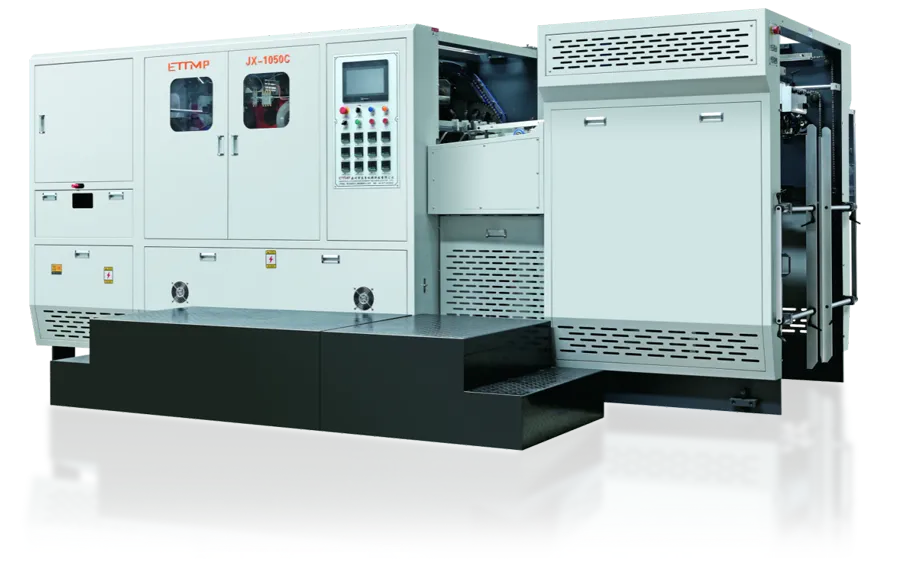
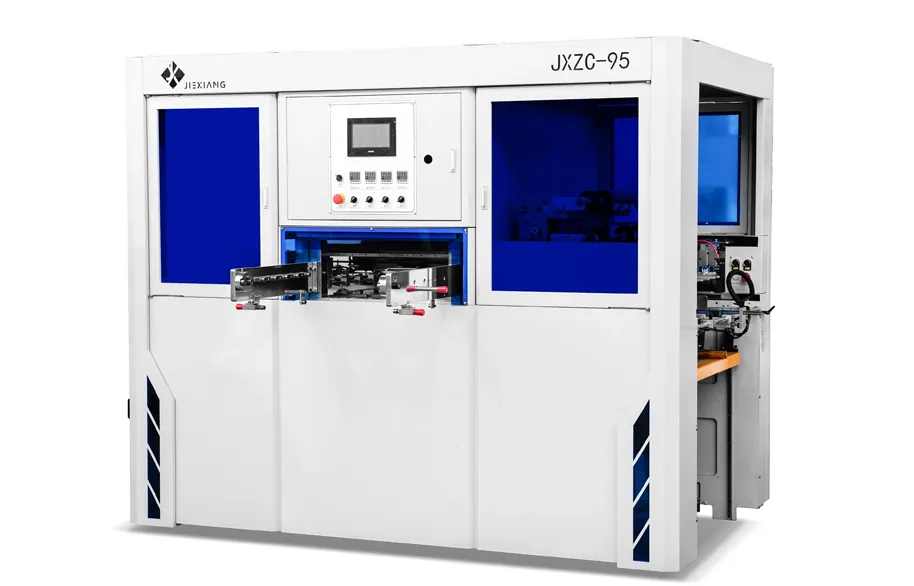
You're holding a cosmetic box with a metallic logo that looks stamped from solid gold — but the sheet underneath is ordinary paper. An Automatic Foil Hot Stamping Machine transfers a thin metallic layer onto paper, cardboard, rigid board, and specialty substrates using heat and pressure. The Full Automatic Servo-driven Foil Stamping Machine from Wenzhou Jiexiang Machinery runs this process at up to 1,800 sheets per hour with ±0.1mm registration accuracy. This article explains what materials and products it stamps, how the transfer works, and how to match the press to your production.
How Does Heat, Pressure, and Time Transfer Foil?
The Three Variables That Control Transfer Quality
Foil stamping works on three variables: temperature, pressure, and dwell time. The heated stamping plate presses the foil against the substrate. The foil's release layer softens, the adhesive activates, and the metallic pigment layer transfers to the surface. Get all three variables right, and the transfer is clean. Get any one wrong, and you get patchy coverage, blurry edges, or foil that peels off after the sheet leaves the press.
The temperature range matters because different substrates respond differently to heat. Thin paper yellows if the plate runs too hot. Plastics warp or melt. Thick cardstock needs enough heat to activate the adhesive across the full thickness. The machine's electric heating system runs 4kW with 2 temperature zones, adjustable from 40°C to 200°C — that window covers paper, cardboard, and most common substrates.
Why Dwell Time Changes with Substrate
Dwell time is how long the heated plate contacts the foil and substrate. Thicker materials need longer dwell times to let the heat penetrate and activate the adhesive. The press's main servo drive controls that contact timing precisely, so you're not relying on mechanical cams that wear and drift. When the dwell time is consistent cycle after cycle, the transfer quality stays consistent too.
What Does Servo Drive Change About Machine Operation?
No Clutches, No Brakes, Less Maintenance
Traditional foil stamping presses use mechanical clutches and brakes to control the platen movement. Those components wear, need adjustment, and eventually need replacement. The JX-80 replaces them with a fully servo-driven system that eliminates clutches and brakes entirely. The result is up to 30% lower energy consumption and less long-term maintenance. The servo motors position the platen directly, so there's no mechanical linkage to drift out of adjustment.
Where the Precision Comes From
The ±0.1mm registration accuracy comes from the combination of servo positioning and the machine's mechanical structure. The castings use QT600-7 ductile iron, and the crankshaft is made of German nickel-chromium-molybdenum diamond for high precision. Imported Taiwanese ball screws ensure precise movement, and the main servo includes overload protection. Together, these components hold registration at high speeds — which matters when you're stamping intricate designs on premium packaging where a half-millimeter shift ruins the visual effect.
| Parameter | Full Automatic Servo-driven Foil Stamping Machine |
|---|---|
| Max. feeding paper size | 600×500mm |
| Min. feeding paper size | 200×150mm |
| Max. foil stamping size | 500×400mm |
| Paper specifications | 128-3000g/m² (cardboard), 3.0mm thick grey board |
| Foil stamping precision | ≤±0.1mm |
| Max. working pressure | 20T |
| Max. working speed | 1,800 sheets/hour |
| Max. feed pile height | 600mm |
| Max. foil length | 240m |
| Electric heating system | 4kW, 2 zones, 40-200°C |
| Foil width | 20-600mm |
| Main motor power | 3kW |
| Full load power | 7kW |
| Machine weight | 1,000kg |
How Does the Machine Keep Foil Feed Consistent?
Tension Control and Servo-Driven Foil Feeding
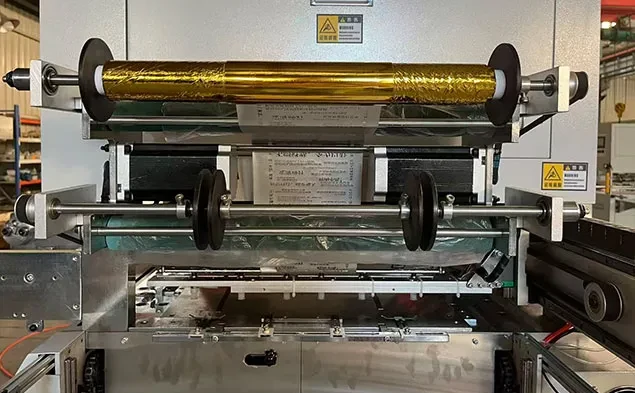
Foil feed inconsistency is one of the most common causes of stamping defects. If the foil advances unevenly, you get gaps in the transfer or wasted foil. The machine's foil management system uses a hydraulic constant tension suspension system that holds tension within ±0.5N fluctuation, paired with a maglev acceleration guide rail that goes from 0 to 120m/min in 0.2 seconds. The dual longitudinal foil feeding mechanism is equipped with Hangzhou Zhishan servo motors and Xinje PLC control, positioned behind the longitudinal foil feeding to ensure smooth and flat foil collection after stamping. The computer-controlled foil monitoring system displays remaining and consumed foil length, and triggers an alarm when foil runs below 10cm.
Automatic Pressure Adjustment
Stamping pressure has to match the substrate and the stamping area. Too little pressure and the foil doesn't transfer; too much and the design blurs or the substrate deforms. The machine's automatic pressure adjustment system lets operators change stamping pressure quickly and precisely through the touchscreen interface, without stopping the press for manual adjustment.
Which Materials and Products Run Best on This Press?
Packaging, Labels, and Specialty Print
The press handles paper specifications from 128g/m² to 3000g/m² cardboard and up to 3.0mm thick grey board. That range covers the majority of packaging substrates:
-
Luxury gift boxes — rigid boxes with metallic logos and decorative foil patterns
-
Cosmetic packaging — folding cartons with holographic or metallic accents
-
Labels and tags — premium labels requiring fine detail and high registration accuracy
-
Greeting cards and invitations — specialty print with decorative foil elements
-
Book covers — hardcover editions with stamped titles and design elements
The 20-ton working pressure gives you enough force to stamp thick grey board and rigid packaging stock without multiple passes. And because the servo drive controls the platen movement, the press can handle thin paper without crushing it — the pressure and dwell time adjust to the material.
A Automatic Foil Hot Stamping Machine like the JX-80 from Wenzhou Jiexiang Machinery also includes a centerline positioning system that enables quick sheet changeovers, plus a double sheet detector and an automatic auxiliary paper delivery function for non-stop operation. The Sino-English touchscreen interface makes setup straightforward for operators familiar with either language.
Straight Answers on Servo Foil Stamping Setup
What's the difference between servo-driven and mechanical foil stamping?
Mechanical presses use clutches, brakes, and cams to move the platen and time the stamping cycle. Those components wear over time and need periodic adjustment. A servo-driven press replaces them with motors that position the platen electronically. You get more consistent timing, lower energy consumption, and fewer mechanical parts to maintain. The JX-80 eliminates clutches and brakes entirely, reducing energy use by up to 30%.
How do I set the right temperature for my substrate?
Start with the foil manufacturer's recommended range, then test on your actual substrate. The JX-80's heating system runs two zones from 40°C to 200°C, so you have room to adjust. Thin paper typically runs at the lower end; thick cardstock and rigid board need higher temperatures. Run a test sheet at three or four temperature settings and inspect the transfer quality — clean edges and full coverage mean you're in the right range.
What causes registration to drift on a foil stamping press?
Registration drift usually traces back to worn mechanical components — loose chains, worn drive parts, or misaligned sensors. On a servo-driven press, the positioning is electronic, so there are fewer mechanical wear points that affect registration. The JX-80 holds ±0.1mm accuracy, and the imported Taiwanese ball screws and main servo overload protection keep that accuracy stable across long production runs.
How much foil does the machine consume per sheet?
Foil consumption depends on the stamping area and the foil advance setting. The machine's computer-controlled foil monitoring system displays remaining and consumed foil length, so you can track usage per job. The dual longitudinal foil feeding mechanism reduces foil consumption and saves foil replacement time. For jobs with small stamping areas, you can step the foil advance down to minimize waste.
Let's Match a Foil Stamping Press to Your Packaging Line
Share Your Substrate and Design Requirements
A Automatic Foil Hot Stamping Machine has to match your substrate thickness, stamping area, and production speed — not the other way around. The Full Automatic Servo-driven Foil Stamping Machine from Wenzhou Jiexiang Machinery runs at 1,800 sheets/hour with ±0.1mm precision, handles paper from 128g/m² to 3000g/m², and uses a fully servo-driven system that cuts energy consumption by up to 30%. If you're specifying a foil stamping press for luxury packaging, labels, or specialty print, send us your substrate and design details — we'll help you confirm the right configuration before you order.