 English
 Español
 عربي
عربي You’re standing in a packaging workshop, holding a beautifully foiled book cover. Your current manual setup takes forever, and quality is all over the place. What you really need is a flat-bed hot foil stamping machine that can handle consistent output without breaking the bank. Here is the short answer: Your choice comes down to three things—substrate type, production volume, and how much automation you truly need. Flat-bed machines excel at high-precision stamping on materials like paper, cardboard, leather, and rigid plastics, delivering sharp detail and deep impression that rotary systems simply cannot match. If your daily run exceeds a few hundred pieces and you value consistency over hands-on control, automation is your path. If you are still debating, read on—because the wrong pick will cost you time, foil, and sleep.
Why the Flat‑Bed Design Still Wins Hearts (and Contracts)
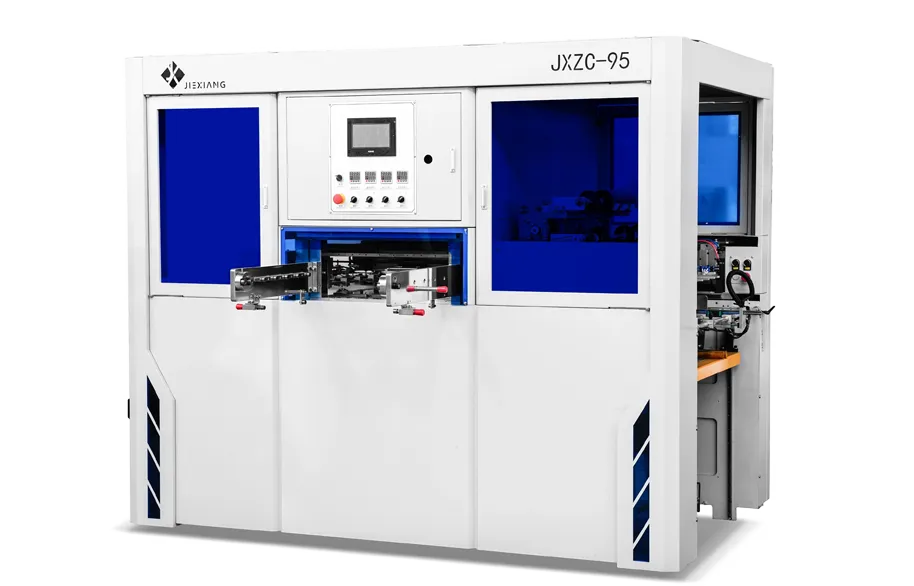
Before diving into specs, let us appreciate why the flat‑bed configuration remains the go‑to for discerning print shops and packaging converters. Unlike rotary machines that press on the fly, the flat‑bed principle uses a stationary platen, pressing the heated die squarely onto the substrate. This yields something invaluable: deep relief and micro‑embossing that you can actually feel. It is the difference between “that looks nice” and “wow, who made this?” For luxury packaging, book covers, certificates, and custom print jobs, the flat‑bed’s ability to handle large or irregularly shaped materials without distortion is a superpower. Rotary machines may be faster on a continuous web, but when your work demands intricate detail and variable substrate thickness, flat‑bed remains the craftsman’s choice.
Define Your Daily Grind – Production Volume and Run Length
Let us get practical. How many pieces leave your shop each day? If you are a small studio or artisan producing fewer than 500 units per day, a manual or semi‑automatic press might suffice. Manual machines offer tactile control and a low entry price, but they top out around 1,000 to 2,000 impressions per hour—and that assumes a very disciplined operator. For growing businesses scaling to mid‑volume production (2,000 to 5,000 sheets per day), a semi‑automatic flat‑bed press strikes a sensible balance. It automates the stamping cycle while leaving feeding to the operator. The result? 15–30% faster throughput than manual systems, with far less muscle fatigue by 4 p.m.. But when you are running high‑volume orders—think 10,000+ sheets daily—the conversation shifts entirely. That is where fully automated platforms enter the picture, and where the market is clearly heading. The global hot foil stamping machine market, valued at approximately USD 1.98 billion in 2025, is projected to grow at a CAGR of 8.37%, reaching USD 3.48 billion by 2032. Most of that growth is coming from automation.
What Are You Stamping? Material Compatibility Matters
Not all substrates behave the same under heat and pressure. Paper and cardstock are forgiving—most flat‑bed machines handle them well. Leather and PVC require tighter temperature control and consistent pressure; otherwise, you will see burn marks or incomplete transfer. Plastics and coated boards demand precise dwell time adjustment. Before you sign anything, ask the supplier: “Show me sample runs on my actual materials.” A machine that works beautifully on 350gsm card may struggle on recycled stock or textured leather. According to industry guides, material type—whether paper, plastic, leather, or cardboard—is the single most overlooked factor in buyer dissatisfaction. Look for machines that offer adjustable temperature, pressure, and dwell time, because one setting definitely does not fit all.
The Automation Question – How Much Is Enough?
Here is where many buyers get tripped up. Automation is not a binary “on/off” switch; it is a sliding scale. Manual presses give you complete control and minimal cost, but each impression depends on your arm strength and focus. Semi‑automatic machines use an electric motor or pneumatic cylinder to apply pressure, removing human inconsistency from the stamping phase while keeping you in charge of feeding. Fully automatic flat‑bed systems handle feeding, stamping, and delivery—some exceeding 7,500 sheets per hour. The return on investment for automation can be dramatic. automation in printing can boost profit margins by up to 20% through reduced labor and material waste. But do not overshoot: if your daily volume is 500 pieces, a fully automated press is like buying a freight train to deliver groceries. Match the automation level to your real‑world throughput needs, not your aspirations.
Flat‑Bed vs. The Alternatives – Where Each Belongs
You will encounter three main technology families in the market. Understanding their sweet spots will help you appreciate why the flat‑bed remains so popular.
Rotary hot foil stamping machines are the speed demons of the industry. Using cylindrical dies that rotate in sync with material feed, they can reach 18,000 impressions per hour on continuous webs. They excel at label production, flexible packaging, and high‑volume commercial runs. However, they are less flexible for design changes, have higher initial investment, and are largely limited to roll‑fed materials. If you are printing millions of labels annually, rotary is your friend. For everything else, read on.
Digital hot foil stamping machines are the new kids on the block. They apply foil without physical dies, working directly from digital files. This is a game‑changer for short runs, personalization, and rapid prototyping—no die costs, no setup delays. But the technology is still maturing: higher initial cost, limitations on foil adhesion for some materials, and slower per‑unit speed compared to automated flat‑bed systems. Digital shines for variable data and on‑demand work, not for sustained high‑volume production.
So where does the flat‑bed automatic foil hot stamping machine fit? Right in the sweet spot between flexibility and volume. You get the die‑based precision that creates deep, tactile impressions. You get medium to high speed—typically 4,800 to 7,500 sheets per hour. And you get versatility across materials that rotary cannot match and digital cannot yet affordably scale. For detailed artwork, short to medium runs, and luxury print applications, the flat‑bed configuration is the proven workhorse.
Beyond the Machine – Why Customization and Support Separate the Best from the Rest
Here is a truth that glossy brochures won’t tell you: two identical-looking machines can deliver completely different real-world results based on how they are configured, supported, and adapted to your specific workflow. That is where customization becomes a competitive advantage. Does the supplier offer tailored die designs for your artwork? Can they adjust foil feeding tension for your specific substrate thickness? Will they provide on‑site training for your operators? These seemingly small details determine whether your machine runs at 90% uptime or 60%.
The global printing finishing equipment market reflects this shift toward integrated, service‑oriented solutions. According to Smithers Pira research, while the market for new post‑press equipment faced a general slowdown in the mid‑2010s, demand has rebounded as manufacturers seek automation and process integration to stay competitive. Buyers today are not just purchasing hardware; they are investing in productivity partnerships.
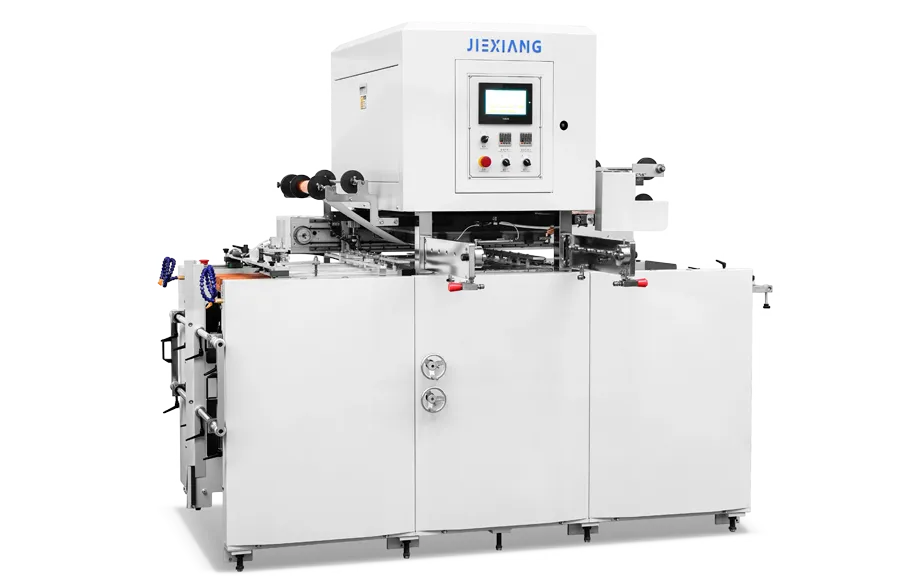
For businesses seeking a reliable flat‑bed automatic configuration, JIEXIANG has engineered its JX‑1040C model with features that address real‑world pain points: ±0.1mm registration accuracy for consistent foil placement, ±1℃ precision temperature control to handle sensitive substrates, and an intelligent foil management system that minimizes waste. The machine achieves up to 4,800 sheets per hour—fast enough for serious production, yet flexible enough for custom jobs. But beyond specifications, what matters is the ecosystem: compatibility with existing workflow, availability of spare parts, and responsive technical support.
Common Pitfalls That First‑Time Buyers Regret
After speaking with dozens of packaging professionals and reviewing buyer feedback, a few mistakes keep repeating:
-
Underestimating floor space. A flat‑bed machine with automated feeding and delivery can occupy significantly more square footage than a manual press. Measure twice, buy once.
-
Ignoring energy consumption. Some older or poorly designed models consume up to 40% more power than modern equivalents. Look for energy‑efficient heating systems and servo‑driven components.
-
Skimping on die quality. As one user noted, “The brass letters are not cheap. Be prepared to spend a small fortune for alphabets”. Factor die costs into your total investment from day one.
-
Overlooking after‑sales support. Several user reviews highlight slow response times for technical issues and parts availability as major frustrations. Before committing, verify the supplier’s service network and warranty terms.
Putting It All Together – Your Selection Checklist
Here is a condensed checklist to keep by your side when evaluating quotes:
-
Substrates you will run most (paper, leather, plastic, cardboard, metal)
-
Peak daily volume (under 500 / 500–2,000 / 2,000–5,000 / 5,000+ sheets)
-
Required precision (fine text and intricate logos vs. large solid areas)
-
Automation level (manual / semi‑automatic / fully automatic)
-
Footprint and power requirements
-
Die and foil compatibility with existing inventory
-
Supplier support (training, spare parts, response time)
If your checklist points toward medium‑to‑high volume with consistent quality demands across multiple substrate types, the flat‑bed automatic configuration is likely your best bet.
The Bottom Line
Selecting a flat‑bed hot foil stamping machine is not about finding the “best” machine—it is about finding the right machine for your substrates, volumes, and workflow. Start with honest answers about your daily production. Match automation level to throughput needs, not budget fantasies. And never underestimate the value of a supplier who understands your materials as well as their own machinery. The right choice will pay for itself in reduced waste, faster turnarounds, and the kind of foil finishes that make clients say “yes” before you quote a price.