 English
 Español
 عربي
عربي A run of luxury gift boxes starts perfectly. Twenty minutes later, the foil is transferring in patches—sharp on the left edge, weak in the center, missing entirely on the right. The operator checks the temperature. It reads normal. The pressure gauge shows the same setting as this morning. But the results say otherwise.
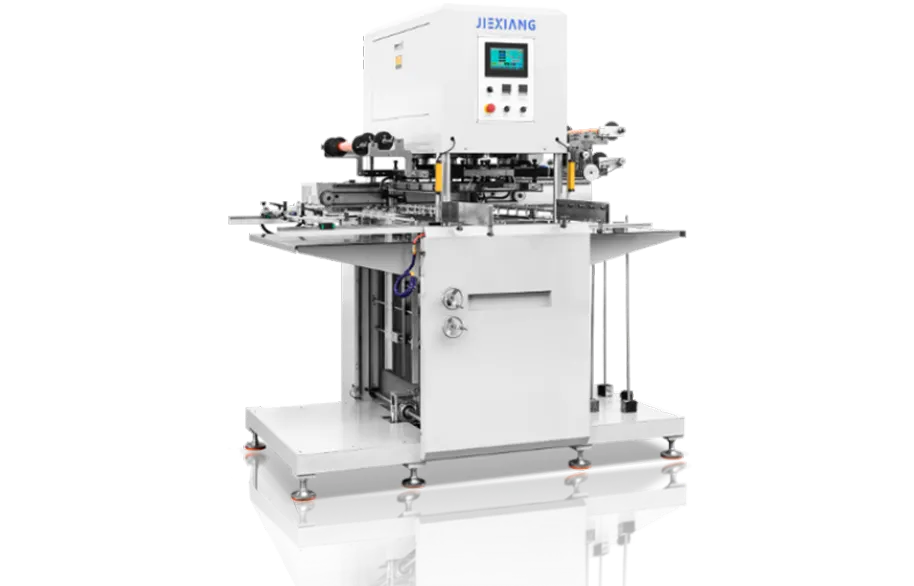
An Automatic Foil Hot Stamping Machine like Jiexiang‘s Full Automatic Servo-driven model combines heat, pressure, and dwell time to transfer metallic or pigmented foil onto paperboard. When the transfer fails, the defect pattern tells you exactly what’s wrong. This guide covers three failure modes, how to diagnose each, and the adjustments that restore consistent stamping.
Foil sticks on one side only? Here‘s why
What the defect looks like. Foil adheres perfectly on the left half of the sheet but is faint or missing on the right. The die is level, the temperature is set correctly, yet the transfer is uneven.
Root cause – uneven pressure distribution. The platen is not parallel to the lower bed. A difference of just 0.1 mm across the sheet width can cause one side to receive full stamping force while the opposite side barely makes contact. On a machine with Jiexiang‘s automatic pressure adjustment system, the controller can compensate for minor variations, but mechanical misalignment requires manual leveling.
How to diagnose. Use pressure‑indicating film between the platen and a test sheet. After a stamping cycle, examine the color density. Light on one side confirms pressure imbalance. Also check the die itself—worn or damaged letters can cause spotty results even with correct pressure.
The fix. With the machine stopped and the platen cooled, adjust the tie‑rod connections or the toggle linkages at the four corners. For Jiexiang machines, the automatic pressure adjustment control device allows fine tuning through the touchscreen, but verifying platen parallelism with feeler gauges should precede any electronic adjustment. Start with the highest point of contact and incrementally lower the high corners until pressure‑indicating film shows uniform density across the entire stamping area.
Good transfer, but peels off – where the heat went wrong
What the defect looks like. The foil transfers initially but can be lifted with a fingernail. Adhesion is weak, and the stamped image lacks durability.
Root cause – temperature is too low, or dwell time is too short. The heat‑activated adhesive layer on the foil did not reach its activation temperature or did not have enough contact time to bond with the substrate. In commercial practice, the safest starting temperature range for paperboard is 80‑120°C for uncoated paper and 110‑150°C for coated board. The service temperature of the material must not exceed its tolerance; overheating paperboard risks discoloration or blistering.
How to diagnose. Use a contact pyrometer on the die surface at operating temperature—controller readings can drift by 5‑10°C. Jiexiang machines maintain ±1°C precision, but actual die temperature should still be verified. If the substrate feels cool immediately after stamping, increase dwell time incrementally rather than raising temperature first.
The fix. Increase temperature in 5°C steps until adhesion improves, staying below the foil manufacturer’s maximum recommended setting. If temperature is already optimal but adhesion is still weak, extend dwell time by 0.1‑0.2 seconds. For deep‑embossed effects where the die penetrates the substrate surface, higher pressure combined with longer dwell often works better than simply raising temperature.
Too cold, too hot – what happens at the wrong temperature
In consumer and commercial practice, the material‘s service temperature should not be exceeded; overheating paperboard can cause material degradation and discoloration. At very low temperatures, the adhesive will not activate. At very high temperatures, the foil may become brittle and crack. The Jiexiang machine’s intelligent temperature management system helps maintain stability, but the operator must choose the correct starting range for the substrate.
Why the foil tears mid‑run (and how to stop it)
What the defect looks like. The stamped image is incomplete, or the foil strip snaps, stopping the machine. Upon inspection, the foil shows jagged edges or longitudinal tears.
Root cause – foil tension imbalance or mechanical obstruction. If the foil is too tight, it stretches and tears under the heat and pressure of stamping. If too loose, it bunches up, causing inconsistent transfer. Foreign objects—hard foil chips or rubber debris stuck in roller gaps—can also scratch and tear the foil instantaneously. Over‑tightening of the foil roll’s brake can cause the foil to be “flattened” or indented, leading to weak spots that propagate into tears.
How to diagnose. Manually unwind the foil roll from the supply shaft. It should move with light, even resistance. If it sticks or jerks, the brake is set too high. Inspect the foil path for debris, especially around idler rollers and tension sensors. A dull slitting blade can also produce burred edges that catch on downstream rollers.
The fix. Adjust the foil supply brake to the minimum tension that still maintains flat, wrinkle‑free movement. For the Jiexiang machine’s vertical and horizontal foil feed systems, reduce the brake pressure in small increments until tearing stops. If tears are intermittent and localized, disengage the foil and run the feed system without material to pinpoint where the snag occurs. Replace slitting blades if burrs are visible. On machines with independent servo‑driven foil axles, misalignment between the longitudinal and transverse feeds can also create uneven tension—verify that both systems are synchronized.
When the servo feed drifts off target
What the defect looks like. Foil consumption is higher than expected, or the stamped pattern drifts relative to the sheet position. The machine uses more foil than necessary, increasing material cost.
Root cause – registration misalignment or foil stretch. On a servo‑driven machine, the electronic shaft synchronizes foil advance with sheet movement through the press. If the registration marks are misread, the foil may be pulled too far or not far enough. Thermal expansion of the foil during long runs can also cause the feed length to drift.
How to diagnose. Run a test sheet with registration marks. Check that the stamped image aligns with the marks within the machine’s specified accuracy of ±0.1 mm. If misalignment is consistent, check the registration sensor lens for dust. If drift increases as the run progresses, the foil may be stretching under tension. The Jiexiang intelligent foil management system monitors tension in real time, but manual verification is still necessary.
The fix. Clean the registration sensor with a soft cloth. Verify that the foil is threaded correctly through all rollers. If drift is mechanical, adjust the foil advance parameters on the PLC. For machines with three longitudinal and two transverse foil axles, each driven by independent Inovance servo motors, the PLC compensates for small variations automatically, but correct initial tension is essential. The maximum longitudinal foil diameter is φ250 mm; exceeding this can cause uneven payout and increase waste.
What to inspect when settings look right but results don‘t
A failing transfer can also point to machine wear rather than process parameters.
Uneven platen temperature. The Jiexiang system uses 20 independently controlled heating zones. If a thermocouple fails, that zone may run cold, creating a corresponding cold spot on the platen. Measure across the platen surface with a pyrometer; all zones should be within ±5°C of setpoint.
Worn toggle linkages. The crankshaft is machined from German nickel‑chromium alloy steel, which resists permanent deformation. However, the bushings in the toggle joints wear over time. Any play in the linkage reduces the force transmitted to the platen at top dead center, causing inconsistent stamping pressure.
Vacuum system problems. Jiexiang’s feeder uses suction cups to lift sheets from the pile. If the vacuum pump is weak or a suction cup is cracked, sheets may be misaligned when they reach the stamping station. Check the vacuum gauge and inspect the suction cups for wear.
What stamping crews ask after the first hour
Q: Why does the same temperature setting produce different results on different days? A: The actual die temperature varies with shop ambient temperature and the length of time the machine has been running. A Jiexiang machine’s temperature control accuracy of ±1 ℃ reduces this variation, but the die’s surface temperature can still be 5-10°C below the controller reading at the start of a run. Always verify with a pyrometer after the machine has stabilized.
Q: How often should the die be cleaned? A: After every job, or immediately if you see foil residue buildup on the die surface. Residue acts as an insulator, preventing heat from transferring to the substrate. Use a soft cloth and isopropyl alcohol—never an abrasive tool that scratches the die surface.
Q: Can I run both foil stamping and die‑cutting in the same pass? A: Yes, on dual‑purpose machines like the JX‑1060TZ, which combines both functions in a single pass. However, the stamping pressure requirement often differs from die‑cutting pressure. If the machine has separate pressure adjustment controls for each function, use them. If not, prioritize the function with the tighter tolerance—typically stamping.
Q: What is the typical service life of the heating elements? A: With daily operation, heater bands typically last 2,000‑3,000 hours. Replace when the platen takes more than 20 minutes to reach operating temperature or when zone temperatures cannot be maintained within ±5°C of setpoint.
Built to deliver consistent foil transfer – shift after shift
When a finishing department needs an Automatic Foil Hot Stamping Machine that delivers uniform transfer across thousands of sheets, the engineering behind the press determines the repeatability of the process. Jiexiang Machinery manufactures the Full Automatic Servo-driven Foil Stamping Machine for high‑volume hot stamping of paperboard, plastic, and packaging materials.
Key features include ±0.1 mm stamping accuracy, maximum speed of 1,800 sheets/hour, and Jiexiang’s automatic pressure adjustment control device for fast, precise pressure tuning via touchscreen. A Chinese/English interface simplifies operation, and the machine can be equipped with vertical and horizontal foil feed systems for simultaneous multi‑directional stamping, reducing foil usage and shortening replacement time. All key components are sourced from established international brands, with a ductile‑iron frame and a crankshaft machined from German nickel‑chromium alloy steel for permanent deformation resistance.
For a production manager dealing with inconsistent foil transfer, the combination of ±1 ℃ temperature control, independent heating zones, and real‑time tension monitoring directly addresses the three root causes of transfer failure. When you encounter a new foil or substrate combination, saved job profiles allow operators to recall proven settings—reducing waste and keeping the line running.
→ Request a quote from Jiexiang Machinery for the Full Automatic Servo-driven Foil Stamping Machine — Share your typical substrate (paperboard, plastic, corrugated), required sheet size, and monthly volume. Their technical team can recommend the right pressure and temperature settings for your specific foil and substrate combination.