 English
 Español
You’ve got a stack of cardboard, a tight deadline, and a packaging order that needs to look flawless. How does it all come together?
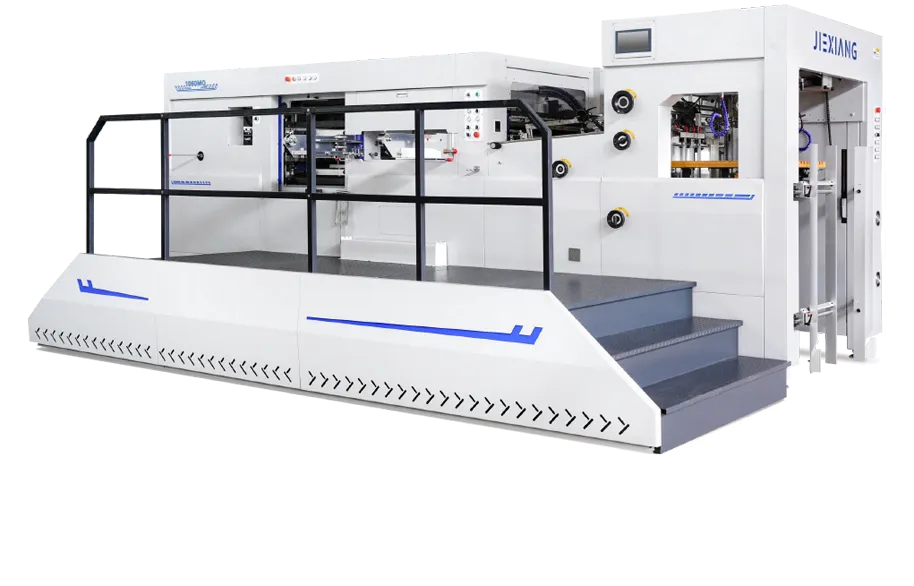
An Automatic Die Cutting & Waste Stripping Machine is the piece of equipment that makes that happen—in one continuous workflow. It takes flat sheets of paper, cardboard, corrugated board, or even semi-hard plastic, and transforms them into precisely cut, creased, and stripped blanks ready for folding and assembly.
Here‘s the thing: this isn’t just a cutting machine. It‘s a three-in-one system that handles cutting, creasing, and waste removal in a single pass. You feed a sheet in one end, and what comes out the other is a finished piece—clean edges, accurate creases, and all the scrap material removed. No intermediate handling, no realignment, no second machine.
The workflow is surprisingly straightforward once you understand the sequence. Sheets travel through a feeder, pass under a heavy-duty platen that applies cutting pressure, move through a stripping unit that removes waste, and exit through a delivery system that stacks finished pieces. Each step builds on the last, and the whole thing runs at speeds you wouldn‘t believe—up to 7,500 sheets per hour.
In the sections ahead, we’ll walk through each stage of that process. You‘ll see what happens at the feeding station, how the die-cutting platen works, what makes the waste stripping system effective, and how the delivery unit keeps things moving. By the end, you’ll have a clear picture of what‘s going on inside that machine.
Where Every Sheet Begins
The process starts at the feeder, and this is where precision matters most.
Vacuum Transport and Sheet Alignment
Sheets are loaded onto the feeder, and the machine uses a vacuum pump to transport each sheet into the production line. The vacuum system—powered by a German Becker pump—ensures smooth, consistent feeding. No misfeeds, no double-sheets slipping through.
Double-Sheet Detection and Register Correction
The feeder includes a double-sheet detector that catches any accidental overlaps before they cause problems. If two sheets try to enter at once, the detector flags the issue and the machine adjusts. It‘s a small feature, but it saves a lot of headaches downstream. Once a sheet is picked up, it moves through a viewing table where operators can inspect the material before it enters the cutting station. This is also where the register correction system does its work—keeping the sheet aligned within ±0.1mm as it travels through the machine.
The feeding system also incorporates side inspection using Panasonic photoelectric sensors. These sensors monitor sheet position continuously and make micro-adjustments on the fly. You don’t have to stand there tweaking settings; the machine handles alignment automatically.
Pressure, Precision, and Steel Rules
This is the heart of the operation—the moment when flat sheets become shaped pieces.
The Platen and Cutting Die
The die-cutting station uses a heavy-duty platen that applies pressure to a cutting die. The die contains sharp steel rules that cut through the material, along with creasing rules that create fold lines. When the platen comes down, it cuts and creases in one motion.
Working Area and Precision Tolerances
The machine‘s oversized die-cutting area measures 1060x750mm, with an effective working area of 1050x740mm. That’s large enough to handle a wide variety of packaging formats—from small cartons to larger display boxes. Precision is the name of the game here. The machine maintains die-cutting accuracy within ±0.1mm. That level of consistency matters when you‘re producing packaging that needs to fold perfectly and fit together without gaps.
Materials and Pressure Control
The crankshaft that drives the platen is made from German nickel-chromium alloy steel. This material resists deformation even under heavy use, which means the machine maintains its accuracy over years of operation. You’re not recalibrating every few months to compensate for wear. The machine also features an automatic pressure adjustment system. Instead of manual guesswork, the system applies the right amount of pressure for each job. Too little pressure and the cut doesn‘t go through; too much and you damage the die or the material. The automatic system gets it right every time.
Making Waste Disappear
Once the sheet is cut and creased, it moves to the waste stripping unit. This is where all those tiny pieces of scrap material get removed so you’re left with a clean, finished piece.
How the Stripping Mechanism Works
The stripping unit uses a horizontal fixed-position design. A middle template coordinates with a progressively accelerated motion curve to drive the stripping upper frame through the waste points. What does that mean in plain English? The machine punches out the waste material with precision, removing everything that shouldn‘t be there.
Simplified Construction and Removal Rate
The system features a simplified stripping structure with fewer moving parts. This design increases the instantaneous punching force at waste points while reducing mechanical complexity. Fewer parts means less maintenance and fewer things that can break. The waste removal rate exceeds 99.5%, which is impressive when you consider the variety of materials the machine handles—cardboard, corrugated board, paper, and semi-hard plastic. Even small and complex shapes are handled effectively through a multi-stage stripping system that uses top ejector pins and bottom support pins working together.
The system pressure is zone-adjustable, giving you control over how much force is applied to different areas of the sheet. This flexibility is particularly useful when you’re working with materials that have varying thicknesses or densities across the same sheet.
Neat Stacks, Ready to Go
After cutting and stripping, the finished sheets need to be stacked neatly and efficiently.
Automatic Stacking and Counting
The delivery unit includes an automatic counting function that tracks each finished piece as it comes off the line. A photoelectric counting system ensures accuracy, so you know exactly how many pieces you‘ve produced without manual tallying.
Double-Decker Feeder and Inserting Mechanism
The machine comes with a double-decker feeder that uses a servo motor to add a feeding function, enabling continuous production with automatic die-cutting. This setup minimizes downtime between batches. An automatic inserting mechanism handles sample collection and can place inserts into the stack as needed.
The finished product is transported to the stacker, where a pneumatic system with 7-9 bar pressure ensures smooth and stable stacking. A pneumatic clutch and brake system (supplied by Sun-Tech) provides precise control over the stopping and starting of the delivery mechanism. The final stack is placed on a stand with a stack weight of approximately 1500kg, ready for the next stage of your production line.
The Specs You Actually Need
Here’s a quick reference table for the full automatic heavy-duty die-cutting and waste stripping machine:
| Parameter | Specification |
|---|---|
| Maximum Sheet Size | 1060×750mm |
| Minimum Sheet Size | 500×400mm |
| Effective Die-cutting Area | 1050×740mm |
| Maximum Cutting Pressure | 300T |
| Die-cutting Precision | ±0.1mm |
| Waste Removal Rate | >99.5% |
| Max Speed | 7500 sheets/hour |
| Total Power | 37.5KW |
| Overall Dimension | 6800×2500×2250mm |
| Machine Weight | 19000KG |
Additional Features Worth Noting
The machine runs on 380V power with a transformer capacity of 45KVA. Operating temperature range is -30°C to 50°C, with a recommended ambient temperature of -20°C to 45°C. The system includes a safety protection mechanism that activates if external interference occurs, automatically disengaging the clutch and brake to protect both the machine and the operator.
What Operators Want to Know
How does the automatic stripping system handle different materials?
The machine uses a zone-adjustable pressure system that lets you dial in the right force for each material type. For cardboard and paper, you’ll use lighter pressure; for corrugated board and semi-hard plastics, you‘ll increase the force. The multi-stage stripping system with top ejector pins and bottom support pins works together to handle even complex waste shapes effectively. The key is matching the pressure settings to your material—and the machine gives you that control.
What’s the maintenance routine for this type of equipment?
Regular inspection is essential. Check the cutting die for wear and replace it when cutting quality starts to decline. Keep moving parts properly lubricated according to the manufacturer‘s schedule. Inspect the vacuum pump and pneumatic system periodically—these are the lifeblood of the feeding and stripping functions. The machine’s simplified stripping structure means fewer components to maintain, but the ones that are there still need attention. Most operators find that calibration takes a few hours for routine checks and longer for major overhauls.
What‘s the typical production volume for a machine like this?
At top speed, the machine runs at 7,500 sheets per hour. Your actual output will depend on sheet size, material thickness, and the complexity of your die-cutting pattern. Simple designs on standard cardboard will run faster; intricate patterns on thicker materials will run slower. For most packaging operations, the machine’s capacity far exceeds typical daily requirements, which means you can meet tight deadlines without running at maximum speed around the clock.
Why It Lasts
You‘ve seen the specs and the workflow—now let’s talk about what actually matters in a die-cutting line.
Built for Precision and Longevity
The machine‘s construction reflects a focus on long-term durability. The German nickel-chromium alloy steel crankshaft is a key example—it’s not the cheapest option, but it resists wear and maintains accuracy over years of heavy use. The four-column guide structure keeps the platen movement stable and precise, reducing the risk of misalignment during high-speed operation.
Automation That Actually Helps
The automatic pressure adjustment system is one of those features that makes a real difference on the shop floor. Instead of relying on operator experience to set pressure manually, the system applies consistent force based on the material and cutting requirements. The result is less waste, fewer rejected pieces, and less time spent on setup.
Adaptability for Different Materials
One of the more impressive aspects of this equipment is its versatility. It handles a broad range of materials—from plain cardboard to corrugated board to semi-hard plastic. That flexibility means you‘re not locked into one type of packaging; you can switch between materials as your orders change. The machine’s 300T maximum cutting pressure gives it the capability to handle heavy-duty applications that lighter machines can‘t touch.
The company behind this equipment is JIEXIANG Machinery, a manufacturer with a strong focus on quality management and core technology development. Their full automatic heavy-duty die-cutting and waste stripping machine reflects that engineering approach—designed for precision, durability, and high-efficiency performance across a range of packaging applications.
If you’re in the market for a die-cutting line, the machine‘s speed range, material compatibility, and automation features cover most common production scenarios. Your specific needs—sheet size, material type, production volume—will determine whether this is the right fit. The best way to know is to get the specs, run your numbers, and see how the machine performs with your actual materials.
Ready to explore your options? Reach out to JIEXIANG‘s team with your sheet specifications and production targets—they can help you determine which configuration matches your needs.