 English
 Español
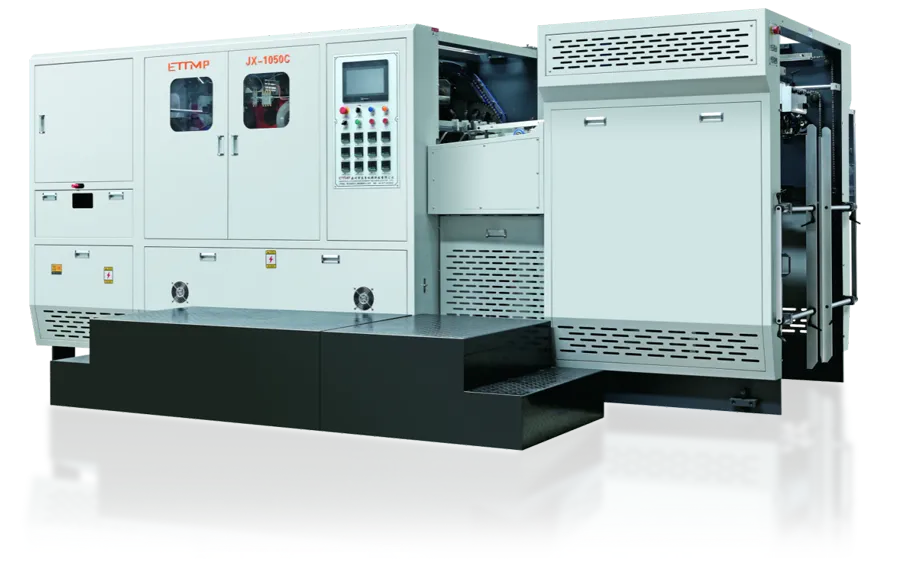
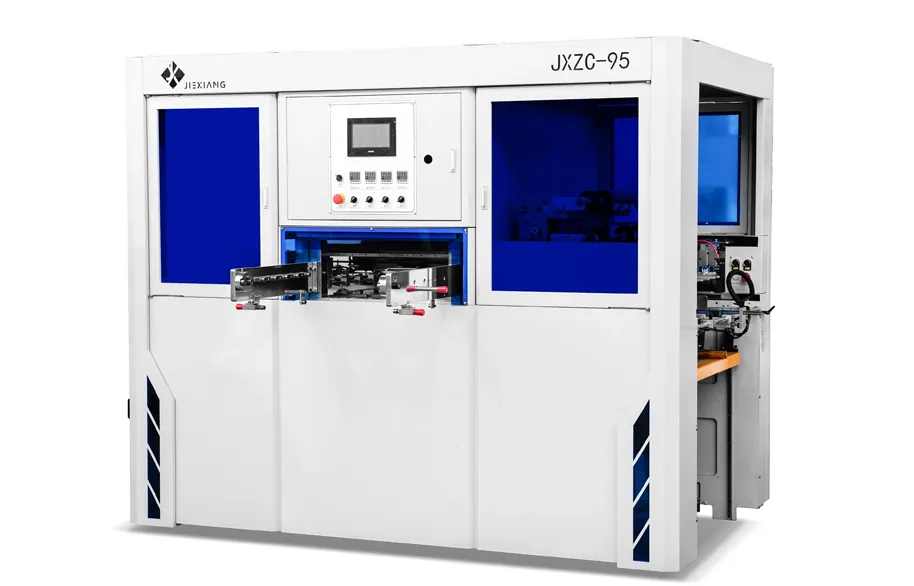
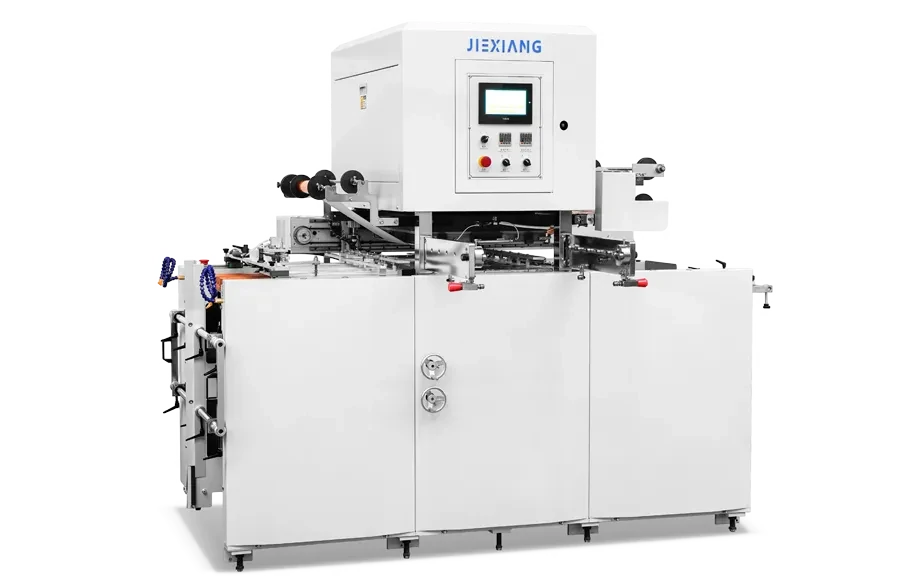
You're looking at a flat-bed foiler for packaging production. The spec sheet lists foil stamping speed, registration accuracy, and foil feed axes. But what about the die-cutting step? On a conventional foil stamping line, the stamped sheets leave the press and travel to a separate die-cutter. That's an extra machine, an extra setup, and an extra handling step between the two operations. An Automatic Foil Hot Stamping Machine that integrates both functions changes that equation. After the foil stamping cycle completes, the same platen closes again to die-cut the blank to its final shape, strip the waste, and eject the finished product. This article explains how the dual-function architecture works, what the integrated die-cutting station means for production flow, and why the 40T platen pressure handles both operations without compromise.
What Production Managers Ask Before Choosing a Dual-Function Press
Speed, Accuracy, and Material Range
Q: What production speed and stamping accuracy does this machine achieve?
A: The JX-1040C runs at 4,800 sheets per hour with foil stamping accuracy of ≤±0.15mm. For applications requiring even tighter registration, the JX-1060T and JX-1060TZ models deliver 7,500 sheets per hour with ≤±0.1mm accuracy.
Q: What paper sizes and weights can the machine handle?
A: Maximum feeding paper size is 1040×740mm, with a minimum of 200×200mm. The machine accepts paper specifications from 128~3000g/m² (cardboard) and grey board up to 3.0mm thick.
Integrated Die-Cutting and Frame Construction
Q: How does the integrated die-cutting station work?
A: The JX-1040C is a flat-bed foil stamping and die-cutting press. After foil stamping, the sheet advances to a die-cutting station where another platen closure cuts the blank to its final shape, strips the waste, and ejects the finished product. This eliminates the separate die-cutting step and the handling between machines.
Q: Why does the frame material matter for a dual-function press?
A: A press performing both foil stamping and die-cutting must withstand the mechanical forces of two platen closures per cycle. The JX-1040C uses QT600-7 ductile iron — a material with nearly twice the tensile strength of grey cast iron. The frame is a single monolithic casting, not a welded assembly. Ductile iron absorbs the shock of platen closure without cracking and dampens vibration so the foil stays in register and the die cuts cleanly across the entire run.
Why Combining Stamping and Die-Cutting Changes Production Flow
In a conventional packaging workflow, foil stamping and die-cutting are separate operations. The stamped sheets are stacked, moved to a die-cutter, loaded again, and run through a second press. Each transfer introduces handling risk — bent corners, misaligned stacks, surface scuffs on the foil. And each setup consumes time that could be spent producing. The JX-1040C eliminates the separate die-cutting step. Stamping and cutting happen in the same pass, on the same machine, with the same registration reference. The result is fewer handling steps, less floor space consumed, and a shorter production cycle from blank to finished product.
What the Integrated Station Means for Luxury Packaging
For wine boxes, cosmetic cartons, and gift boxes where surface quality is paramount, eliminating the transfer between stamping and die-cutting removes a major source of surface defects. The foiled surface never leaves the press until the blank is cut and ready for folding.
Automatic Pressure Adjustment for Consistent Impressions
The JX-1040C features an automatic pressure adjustment system for swift and precise stamping pressure control. For deep-embossed logos and holographic images where impression depth must be identical from the first sheet to the last, this system eliminates the manual trial-and-error that consumes time and material during job setup.
JX-1040C: Technical Data at a Glance
| Parameter | Specification |
|---|---|
| Model | JX-1040C |
| Max. Feeding Paper Size | 1040×740mm |
| Min. Feeding Paper Size | 200×200mm |
| Max. Foil Stamping Size | 1010×720mm |
| Foil Stamping Precision | ≤±0.15mm |
| Max. Working Speed | 4,800 sheets/hour |
| Max. Working Pressure | 40T |
| Paper Specifications | 128~3000g/m² (cardboard), 3.0mm grey board |
| Foil Length | 240m (lengthwise) |
| Electric Heating System | 5kw, 2 temperature zones, 40-200°C |
| Foil Width | 20-600mm |
| Main Motor Power | 7.5kw |
| Frame Material | QT600-7 ductile iron, monolithic casting |
| Foil Feed Axes | 3 vertical + 2 horizontal (Inovance servo) |
| Control System | Inovance PLC |
| Die-Cutting Function | Integrated |
Where Dual-Function Foilers Deliver the Most Value
The JX-1040C serves applications where both foil stamping and die-cutting are required:
Luxury Packaging and Premium Cartons
Wine boxes, spirits cartons, cosmetic packaging, and gift boxes demand flawless metallic finishes and precise die-cut shapes. The ±0.15mm registration ensures that brand logos and decorative elements align precisely with the printed design. The integrated die-cutting station produces the final blank without a separate operation.
Commercial Print and Greeting Cards
Greeting cards, invitations, and promotional materials benefit from the machine's ability to stamp metallic and holographic effects and then die-cut the card to its final size in the same pass. The ductile iron frame maintains registration through long runs, eliminating the blurred edges that vibration can cause on lighter presses.
Labels and Security Printing
Anti-counterfeit stamping, holographic labels, and security documents require tight registration and consistent foil transfer. The Inovance servo system's 1ms control cycle and the machine's automatic pressure adjustment deliver the repeatability that these applications demand.
Common Questions About Dual-Function Foil Stamping Equipment
Common Operational Questions
Q: What maintenance does the machine require?
A: The machine includes an automatic oiling system with a cooling fan on the oil pump. Oil circulates through the gear housing and main bearings, lubricating the intermittent mechanism and platen toggle linkage. A maintenance technician checks the oil level weekly, not daily.
Q: What safety features are included?
A: The main servo includes overload protection, and the timing belt features fracture protection. The machine automatically halts upon external impact to minimize damage and prevent malfunctions. Vacuum negative pressure detection ensures the machine ceases operation when no paper is present.
Q: How does the machine handle different foil widths and types?
A: Foil width ranges from 20-600mm, accommodating standard and specialty foils. The computer-controlled foil monitoring system displays remaining and consumed foil length, and an alarm triggers if foil length drops below 10cm.
Q: Can the machine be used for foil stamping only, without die-cutting?
A: Yes. The machine can operate in foil stamping mode only, or in combined stamping and die-cutting mode. The operator selects the mode based on the job requirement.
Request a Dual-Function Foil Stamping Configuration
An Automatic Foil Hot Stamping Machine with integrated die-cutting, dual-axis servo foil feed, QT600-7 ductile iron construction, and 4,800 sheets/hour output is the practical choice for packaging converters and commercial printers who need both foil stamping and die-cutting without a second press. The JX-1040C from Jiexiang delivers ≤±0.15mm stamping accuracy, 1040×740mm maximum sheet size, 40T working pressure, three vertical and two horizontal Inovance servo foil feed axes, automatic pressure adjustment, integrated die-cutting, and full-load power of 13kW.
Whether you're producing luxury wine boxes, cosmetic cartons, greeting cards, or security labels, this machine offers the speed, precision, and dual-function capability that modern foil stamping operations demand. With the integrated die-cutting station eliminating a separate production step, it directly improves your production flow and reduces handling risk.
Contact Jiexiang for a dual-function foil stamping configuration assessment → their team can help you select the right model, foil feed configuration, and die-cutting setup for your specific substrates and stamping designs. Get a machine that stamps and die-cuts in one pass — so your production line runs shorter and your surface quality stays flawless.