 English
 Español
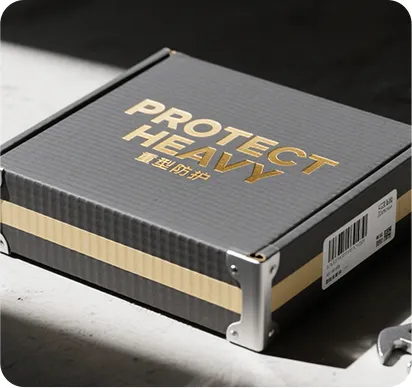
A luxury rigid box sits on the sampling table — its lid bears a brilliant metallic logo, and a precisely cut window reveals the product inside. Five years ago, a packaging converter might have needed two separate stations and multiple handling steps to achieve that result. Today, a single pass on the right equipment is all it takes. But what kind of equipment accomplishes foil transfer and precision cutting in one seamless sequence? And how do you know if your shop is ready for it?
That’s the question we unpack here — not by listing glossy spec sheets, but by looking into the processes, the real-world bottlenecks this machinery addresses, and the factors that actually determine productivity on the factory floor.
Why Packaging Lines Are Moving Away from Two Separate Machines
Walk through a typical finishing department that still relies on independent platen foil stamping presses and platen die cutters, and the inefficiencies become visible quickly. Sheets are stacked, transported, and registered twice — each transfer introduces micro-shifts in alignment, especially when running lightweight board or synthetic substrates above 2,000 sheets per hour. A 2023 survey by a German packaging machinery association noted that registration errors account for nearly 18% of material waste in multi-step luxury packaging finishing.
This is exactly the pain point that makes converters reconsider their line layout. An integrated system that handles both functions inside a single frame eliminates the re-registration step entirely. Instead of aligning the sheet to a foil stamping chase and later repositioning it on a die cutting chase, the sheet grips remain engaged through both stages. The result: foil-to-cut accuracy under ±0.15 mm becomes achievable at production speeds, not just in lab demonstrations.
Where operators used to split job changeovers between two machines — adjusting temperature zones, changing foiling honeycomb plates, then mounting cutting dies — now they handle one setup. The reduction in makeready time often falls between 35% and 50%, depending on job complexity. These figures come from multiple shop floor observations rather than marketing brochures, and they highlight why even mid-size trade finishers are evaluating a combined setup.
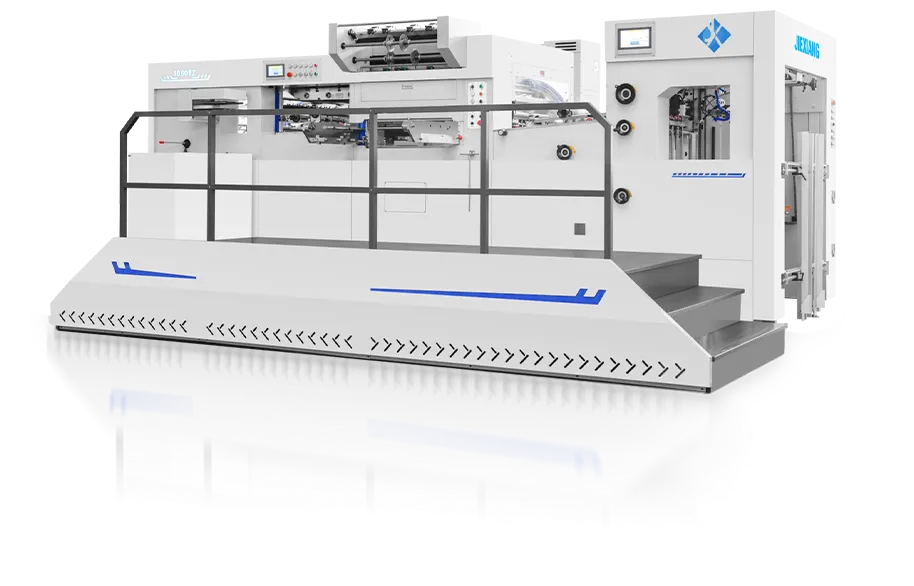
At this point, you might want to translate these operational benefits into tangible specifications. For those who are actively comparing equipment, view detailed specifications of a platform that has been designed around this integrated concept.
The 3 Core Processes That Happen Inside One Compact System
To decide whether this equipment fits your product mix, it helps to break down exactly what happens mechanically — without getting lost in jargon.
1. Precision Foil Transfer Under Controlled Heat and Pressure
A heated upper platen, typically equipped with independently adjustable temperature zones (often up to 6 or 8 zones on professional machines), presses foil against the substrate. The foil carrier — polyester film coated with a release layer, metallic or pigment layer, and adhesive — transfers its decorative layer only where a raised or flat stamping die makes contact. Temperature stability is critical: a variance of ±3°C can cause incomplete transfer on fine serif typefaces. Modern systems use PID-controlled heating circuits and real-time thermocouple feedback to maintain consistency.
2. Die Cutting with Kiss-Cut or Through-Cut Capability
Immediately after — or sometimes in parallel with — the foiling stroke, a cutting die mounted on the same chase or a subsequent station delivers the required cut. For label applications, this is often a kiss cut through the face material but not the liner; for folding cartons, it’s a full through-cut that separates the blank from the sheet skeleton. The ability to swap between magnetic flexible dies and solid flatbed dies in the same machine gives converters flexibility without needing an entirely separate cutting line.
3. Automated Foil Advance and Waste Stripping
A common bottleneck in standalone hot foil stamping is the manual or semi-automatic foil feed. In a combined machine, a servo-driven foil advance system pulls exactly the required foil length per impression — sometimes as little as 1 mm more than the image length — and an integrated stripping station removes both foil waste and die cutting waste in one motion. This dramatically reduces manual intervention and keeps the work area clean, which is especially important when running UV-coated or static-prone sheets.
What to Look for When Upgrading to an Inline Finishing System
Not every combined system delivers the same return. Based on feedback from production managers and independent technical assessments, here are the criteria that matter most:
1. Minimum Sheet Size and Gripper Edge
Some machines require a minimum gripper edge of 12–14 mm, which can limit layout efficiency on small-format jobs. Versatile systems accommodate edges as narrow as 8 mm, allowing more blanks per sheet. This directly impacts material yield, particularly for short-run luxury cosmetic or spirits packaging.
2. Foil Saving Efficiency
A well-tuned foil advance system should reduce foil consumption by 30–50% compared to basic mechanical pulls. Look for machines that provide per-job foil advance data — being able to track actual usage against estimated consumption is essential for accurate costing, especially when running expensive holographic or custom-color foils.
3. Changeover Time Between Jobs
If your typical lot size is shrinking — a trend reported by 67% of folding carton converters in a recent Smithers study — then job changeover speed becomes the single biggest lever on profitability. Quick-lock chase systems, memory-based temperature presets, and automatic foil threading can push changeover under 15 minutes. Without these features, a machine capable of 5,000 sheets per hour may spend too much of its shift idle.
For those navigating a purchasing decision now, having a structured evaluation framework helps avoid costly oversights. get an equipment assessment guide that walks through these parameters step by step.
Common Pitfalls Operators Face with Combination Machinery
Here’s where floor-level experience separates real efficiency gains from theoretical ones. Even the most advanced machine will underperform if operators fall into certain traps:
-
Overlooking foil tension consistency. When the foil unwind spool isn’t properly aligned or the dancer arm damping is set too loose, the foil wrinkles exactly at the point where a fine detail needs to transfer. The result is patchy foiling — often mistaken for a temperature problem. In our field observation, solving a simple foil path alignment corrected what had been diagnosed as a “machine precision issue” for months.
-
Using the wrong type of cutting die for the substrate. A solid steel rule die that works perfectly on 350 gsm board can crush the flutes of E-flute micro-corrugate if the ejection rubber is too hard. Machines that support both magnetic flexible dies and conventional flatbed dies give the operator more room to match tooling to the material, but only if the operator is trained to make that call.
-
Neglecting makeready on the foil side before fine-tuning the cut. When operators try to set the cutting depth first and then adjust foil pressure, they often end up with either incomplete foil coverage or excessive cutting penetration that damages the bottom cutting plate. A disciplined sequence — heat-stabilize the chase, calibrate foil pressure, then dial in kiss-cut depth — produces more consistent results in half the tries.
These are not hypotheticals. They come from real troubleshooting sessions in packaging facilities, and they underscore why operator training and machine ergonomics (such as clear digital displays and one-touch recipe recall) are just as important as mechanical specifications.
Bringing It Together: Does Your Application Justify the Integration?
The decision to move to a single-pass foiling and cutting system doesn’t depend solely on throughput numbers. It hinges on the complexity of your jobs. If most of your work involves simple rectangular cartons with a single foil block, a separate, well-maintained conventional press may still serve you well. But if more than 30% of your orders now ask for combination detailing — foil next to embossing, intricate cutouts, multiple foil colors in register — then the cumulative handling and registration losses begin to outweigh the capital differential.
Many converters first test the waters by outsourcing a handful of complex jobs to a trade house equipped with an integrated machine. When they see the quality consistency (and the reduced rejection rate), the investment case becomes clearer. The key is to look beyond the listed maximum speed and examine real-world factors: setup time per order, foil waste percentage, and the cost of rejected sheets due to misregister. Those are the numbers that show up on the P&L.
If you are looking for a system that has already been refined around these practical demands — one where quick die change, tight foil-to-cut alignment, and low waste rates are backed by field data — you may want to explore how JIEXIANG’s platform handles the specifics. see how JIEXIANG’s machine handles diverse materials from 100 gsm paper to rigid board, and discover whether it aligns with your production reality.
Disclaimer: All technical performance figures mentioned are based on published industry averages and field observations; actual results vary with substrate, tooling, and operator skill. This article does not replace a formal engineering evaluation.